
What Motorists and Dealers Need to Know
Every year, the UK vehicle market experiences two major registration changes that influence new car sales, used car prices, and dealership activity. In March 2026, the Driver and Vehicle Licensing Agency (DVLA) introduced the new “26” registration plates, marking the first vehicle registration update of the year.
For buyers, the arrival of a new plate is often an exciting moment — it signals a brand-new vehicle. For motor dealers, however, it represents something even more significant: a shift in market demand, stock movement, and customer behaviour.
In this article, we explain what the 26 registration plate means, how the system works, and why it matters for the UK motor trade.
What Are the “26” Plates?
From 1 March 2026, all newly registered vehicles in the UK began receiving number plates containing the “26” age identifier. This plate will remain in use until 31 August 2026, when the registration system will move to the “76” plate for the second half of the year.
This change follows the UK’s biannual vehicle registration system, where new plates are introduced every March and September.
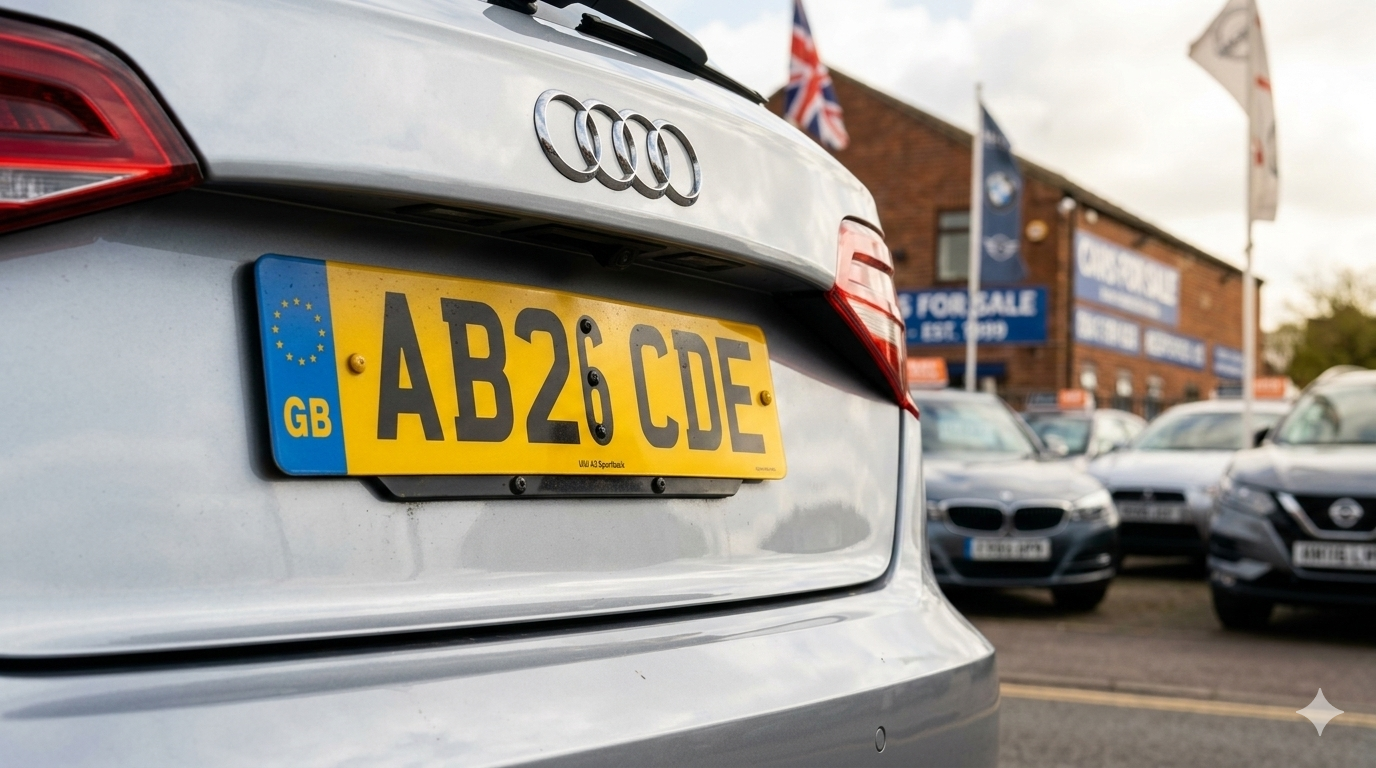
A typical “26” registration looks like this:
AB26 CDE
The format follows a consistent structure used across the UK:
- First two letters – the region where the vehicle was registered
- Two numbers – the age identifier (in this case, 26 for 2026)
- Final three letters – random characters assigned to the vehicle
This format allows anyone to quickly identify when a car was first registered.
Why the March Plate Release Matters
The March plate change is traditionally one of the busiest periods in the UK automotive market.
Many buyers delay purchasing a new vehicle until the newest registration becomes available. This means dealerships often experience a surge in demand immediately after the new plates launch.
For the industry, this creates several knock-on effects:
Increased New Car Sales
Many drivers prefer owning a vehicle with the latest plate, as it indicates the newest model year and often improves resale value.
Trade-Ins Rise
When buyers purchase new cars, they typically part-exchange their existing vehicles. This increases supply in the used car market.
Used Car Pricing Adjustments
Vehicles registered before the new plate may experience slight price adjustments because they suddenly appear “one year older” in the market.
For independent dealers, these seasonal shifts often create new opportunities to source and sell stock more quickly.
How the UK Registration System Works
The UK registration system was designed to make it easy to identify the age of a vehicle.
Each year is split into two registration periods:
| Registration Plate | Registration Period |
|---|---|
| 26 | 1 March 2026 – 31 August 2026 |
| 76 | 1 September 2026 – 28 February 2027 |
The September plate simply adds 50 to the year number. For example:
- 26 → 76
- 25 → 75
- 24 → 74
This system helps buyers and dealers quickly determine the age of a vehicle at a glance.
DVLA Restrictions on Certain Plates
Before releasing each new registration series, the DVLA reviews thousands of potential number plate combinations.
For the 2026 “26” series, more than 400 number plate combinations were blocked because they could be considered offensive, inappropriate, or politically sensitive.
These restrictions are part of the DVLA’s routine review process, which occurs twice a year before the March and September registration releases.
The aim is to prevent combinations that could be interpreted as:
- offensive language
- political messages
- references to violence or crime
- discriminatory terms
This ensures number plates remain suitable for public display on UK roads.
Legal Rules Drivers Must Follow
The introduction of new plates also comes with reminders about the legal standards for number plates.
Drivers must ensure their plates meet strict requirements regarding:
- correct font and spacing
- reflective materials
- proper plate dimensions
- legibility for number plate recognition systems
Drivers using illegal or modified plates could face fines of up to £1,000 and potential MOT failure.
These regulations help ensure vehicles can be easily identified by law enforcement and traffic monitoring systems.
What the “26” Plate Means for the Used Car Market
Although new plates mainly affect new car sales, they also influence the used vehicle market.
Each March plate change often leads to:
- increased part-exchange vehicles entering the market
- more competitive pricing on older stock
- stronger demand for nearly new cars
Dealers who understand this cycle can take advantage of these shifts by preparing stock and marketing strategies ahead of time.
For independent dealerships, the March and September registration periods often represent the most active trading months of the year.
The arrival of the 26 registration plates in March 2026 marks another milestone in the UK’s structured vehicle registration system.
For motorists, it represents the excitement of owning a brand-new car with the latest plate. For the motor trade, however, it signals a broader market shift — one that influences vehicle supply, customer demand, and pricing dynamics across the industry.
As the year progresses, attention will now gradually turn to the next registration change in September 2026, when the 76 plates arrive and the cycle begins again.
Understanding how these registration changes affect the market can help both buyers and dealers make smarter decisions throughout the year.


Leave a Reply