
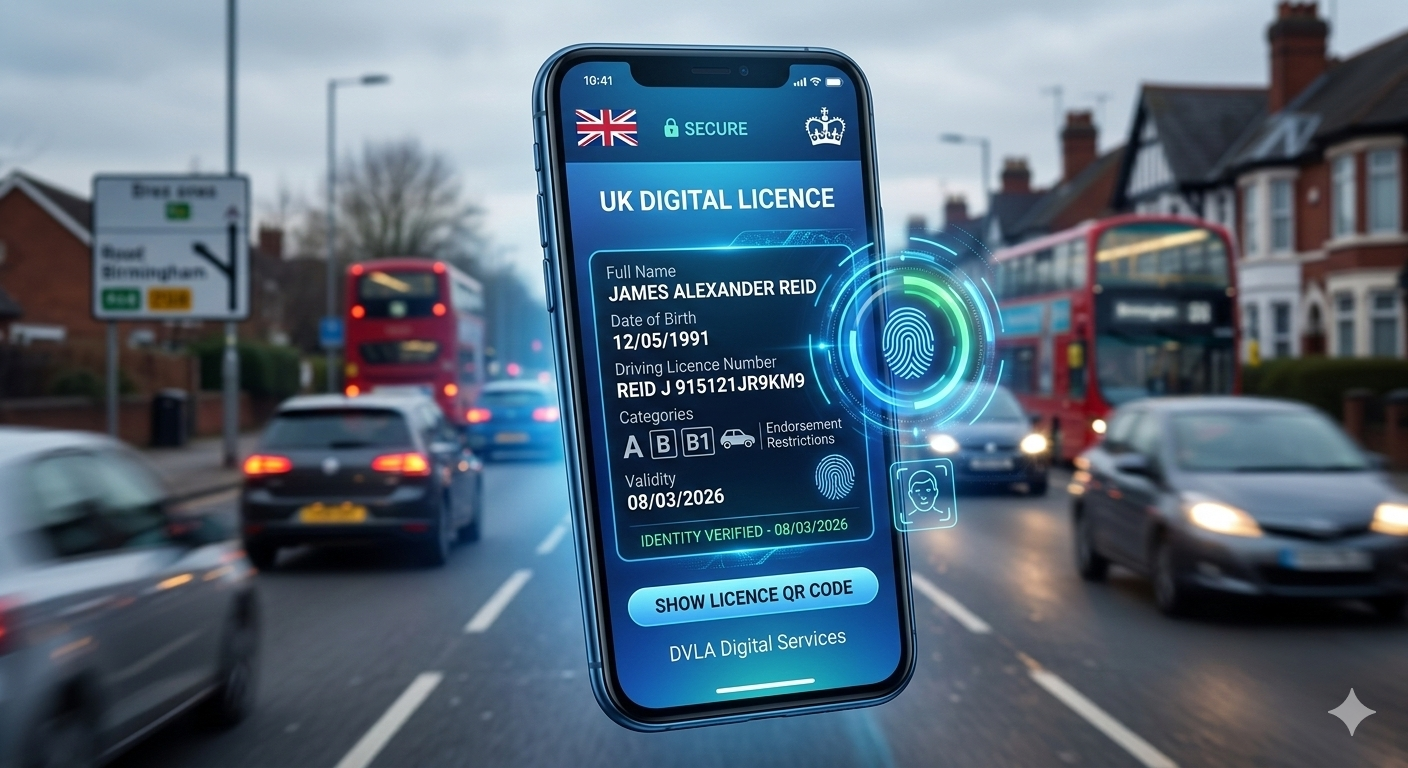
The UK motoring landscape is entering a new digital era. In one of the most significant changes to driver identification in decades, the UK government and the Driver and Vehicle Licensing Agency (DVLA) are rolling out a digital driving licence that motorists will be able to store on their smartphones.
While the traditional photocard licence is not disappearing overnight, the introduction of a secure digital version signals a major shift in how drivers interact with government services, prove their identity, and manage their driving records.
For motorists, it promises convenience and faster access to information. For the motor trade—including dealerships, rental companies, and fleet operators—it could transform the way licences are verified and recorded.
Here’s everything you need to know about the UK’s digital driving licence rollout.
A Major Step Towards Digital Government
The digital driving licence will be stored within the government’s new GOV.UK Wallet, a smartphone-based platform designed to hold official credentials securely. Government Digital Service is developing the system as part of a wider strategy to modernise public services and bring government documents into a secure digital environment.
The initiative forms part of the UK’s broader digital transformation plan, which aims to make government services easier to access and more efficient for citizens.
The digital licence will function as an official electronic version of the existing photocard driving licence, containing the same details such as:
- Driver name and photograph
- Licence number
- Date of birth
- Address
- Driving entitlements
- Licence expiry date
Drivers will be able to access their licence directly from their phone whenever they need to prove their identity or driving status.
When Will Digital Driving Licences Launch?
The rollout is being introduced in phases.
Initial testing began internally with government staff and pilot groups in 2025. Following successful trials, the programme is now expanding to a broader rollout across the UK throughout 2026 and beyond.
Eventually, millions of drivers will be able to access their licence digitally through the GOV.UK One Login app, which acts as a single gateway for many government services.
Importantly, the digital licence will not replace the physical photocard licence immediately. Drivers will still be able to carry and use the traditional licence, and the digital version will remain optional.
How the Digital Licence Will Work
Once the system is fully launched, drivers will be able to add their licence to the GOV.UK Wallet by verifying their identity through the government’s secure login system.
The process is expected to follow these basic steps:
- Download the GOV.UK Wallet or One Login app
- Sign in or create a verified government account
- Confirm your identity using biometric checks or official documents
- Add your driving licence to the digital wallet
Once activated, the digital licence will display your driving credentials and entitlements, just like the physical card.
The system will also allow authorities and businesses to verify licences quickly through secure digital checks.
What the Digital Licence Can Be Used For
One of the biggest advantages of a digital licence is its flexibility.
Drivers will be able to use their digital licence in many of the same situations where they currently use their photocard licence.
Potential uses include:
Identity verification
The digital licence can act as proof of identity or age for purchasing age-restricted products.
Car rentals and vehicle hire
Rental companies will be able to confirm driving entitlements instantly.
Police and roadside checks
Drivers may be able to show their licence directly from their phone.
Online verification
Websites and services could verify driver details instantly using secure digital credentials.
This could remove the need for paperwork, printed codes, or manual licence checks in many cases.
Security and Privacy
One of the biggest concerns surrounding digital identification is security.
However, the government has stated that the digital licence will use bank-level encryption and biometric security, such as facial recognition or fingerprint authentication built into smartphones.
This means:
- Licences cannot be accessed without the phone owner’s authentication
- Digital records can be instantly revoked if necessary
- Fraud or tampering becomes significantly harder than with physical cards
In many ways, digital credentials may prove more secure than plastic licences, which can be lost, stolen, or forged.
Why the Government Is Introducing Digital Licences
The move to digital driving licences is part of a wider government push to modernise how public services operate.
By introducing secure digital credentials, the government hopes to:
- Reduce paperwork and administrative costs
- Improve access to public services
- Simplify identity verification
- Increase security and fraud prevention
The digital licence is expected to be one of the first credentials available in the GOV.UK Wallet, alongside other documents such as Veteran Cards and DBS checks.
Ultimately, the government plans for many official documents to be stored and accessed digitally by the end of the decade.
What This Means for the Motor Trade
For dealerships and automotive businesses, digital driving licences could significantly streamline several processes.
Dealers often need to verify driving licences for:
- Test drives
- Vehicle finance applications
- Rental or courtesy car agreements
- Identity verification during sales
A digital licence could allow instant verification of driver details and licence status, removing the need for photocopies or manual checks.
This could reduce administration time and improve compliance with identity and insurance requirements.
As the system evolves, digital identity checks may become integrated into dealer management systems, finance platforms, and insurance verification tools.
Will Physical Licences Disappear?
For now, the answer is no.
The government has confirmed that physical photocard licences will remain valid and available, even after the digital version launches.
This ensures the system remains inclusive for people who do not use smartphones or prefer traditional documents.
However, over time it is likely that more services will begin accepting digital credentials as the standard method of verification.
The Future of Driving Credentials
The introduction of digital driving licences marks the beginning of a broader shift in how drivers interact with vehicle authorities and government services.
In the coming years we may see:
- Real-time driving record updates
- Instant licence renewals
- Automatic notifications for MOTs or tax
- Digital vehicle documentation
- Integrated identity verification across services
For both motorists and the automotive industry, the move towards digital identity could simplify many everyday processes.
The rollout of digital driving licences represents a major milestone in the UK’s journey toward modernised public services.
While the familiar photocard licence will remain in circulation for years to come, the ability to store and manage your driving credentials on your smartphone reflects how quickly everyday systems are evolving.
For drivers, it promises convenience and easier access to important information. For businesses within the automotive sector, it opens the door to faster, more secure identity checks and streamlined processes.
As the rollout continues through 2026 and beyond, the digital driving licence could soon become a normal part of the UK driving experience.

Leave a Reply